
Player Story: Tracey Morey
Dawlish goalkeeper, Tracey Morey, shares her story of falling in love with the sport and how she has recently become the co-creator of the UK's first Hearing Impaired and Deaf (HID) Walking Football team.
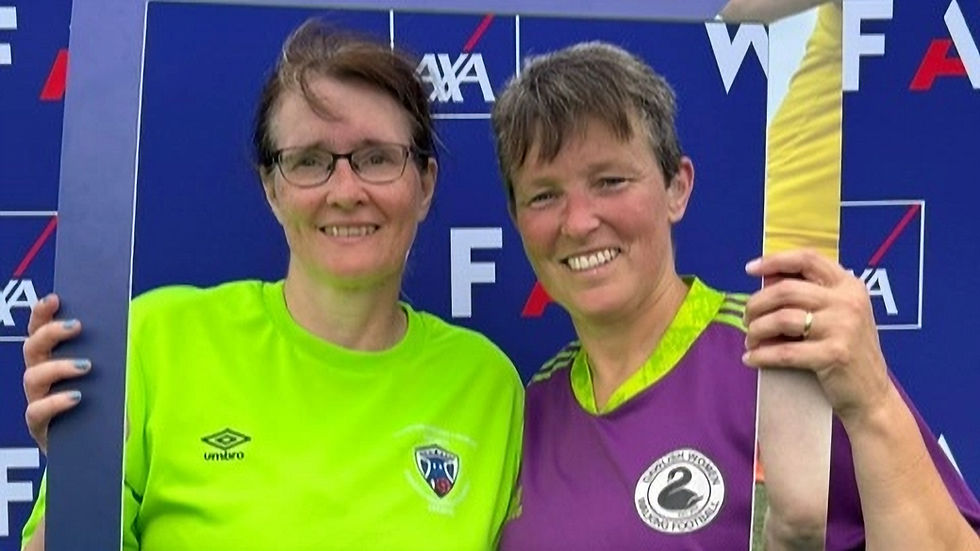
Tracey Morey (right) with Beth Nayeb
I started walking football three years ago. Living in Teignmouth, Devon, I was invited to join a group of ladies playing the game locally. That small, informal invitation would eventually grow into what is now Dawlish Women’s Walking Football Club — and it would completely change my life.
I had never played football before. In fact, I’d never even been particularly interested in it. Sport, however, had always been part of who I am. I’ve always enjoyed being active, so I thought, why not give it a go? Little did I know that what began as curiosity would develop into a genuine love for the game.
I joined my first session in Dawlish with an open mind. What started as a way to keep fit quickly became something far more meaningful. The camaraderie, laughter and shared sense of purpose were electric. It wasn’t just about football — it was about belonging. It didn’t take long for me to realise that walking football wasn’t only a recreational sport; it had the potential to be a powerful platform for inclusion. I saw firsthand how adapting the traditional game could help people stay active, build friendships and feel part of something bigger.
Initially, I tried playing outfield, but I found it challenging due to my profound hearing loss and lack of directional hearing. Communication on the pitch is vital, and without being able to locate where sound is coming from, it was difficult. So, I stepped into goal — and that’s where I’ve remained ever since. Not only do I now play for Dawlish Women’s Walking Football Club, but I’ve also had the privilege of representing the South West Region.
Walking football truly is open to everyone
But in early 2026, alongside Beth Nayeb from Taunton and District Walking Football Club, I helped develop something entirely new: the first Hearing Impaired and Deaf (HID) Walking Football team in the UK.
The goal was simple but deeply meaningful — to create a space where deaf and hearing impaired women could play walking football with dignity, confidence and community.
The challenges of being deaf or hearing impaired in sport are not always obvious to others, but they are significant:
• Not being able to hear the whistle.
• Missing team talks or coaching instructions.
• Struggling with excessive background noise.
• Feeling left out of social conversations.
• Confusion around when play starts and stops.
• Wind interference on hearing aid microphones.
These barriers can make participation exhausting rather than enjoyable.
Building the HID team was not without its challenges.
We had to think carefully about adapting communication on the pitch and creating an environment where everyone felt included. But when players from across the South of England heard the vision, they stepped forward.
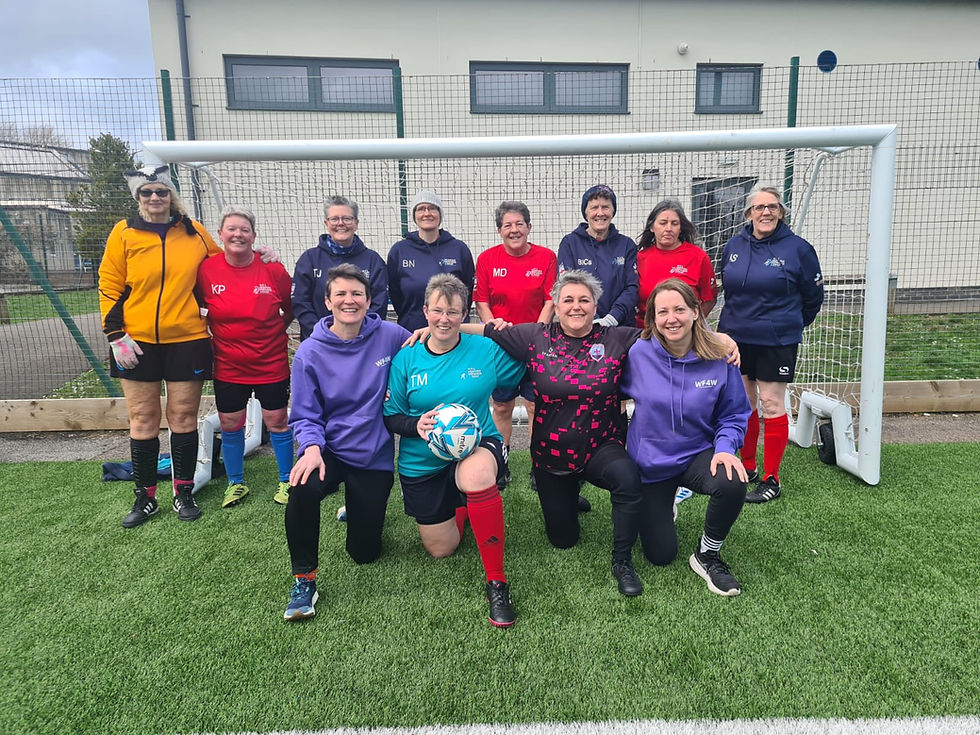
Today, we have 15 dedicated women from across the south on the country who share not only a passion for football, but also a belief in the power of sport to break down barriers.
We have been incredibly fortunate to receive support from The Walking Football Association (WFA), Stuart Langworthy and Julia Tibbs, who have backed the venture and helped connect us with wider walking football networks. Their encouragement has strengthened our belief that inclusion should sit at the heart of the game.
The HID team is about more than training sessions and fixtures. We see ourselves as ambassadors for inclusion in sport. We would love the opportunity to play exhibition matches — not just to compete, but to demonstrate what disability football looks like at its very best: where participation matters more than perfection, and where everyone is genuinely welcome.
Walking football certainly had a positive impact on me. What began as a simple decision to try something new grew into a mission to make football accessible for hearing-impaired and deaf athletes. As the HID team continues to develop, there is a shared sense of excitement about what lies ahead — whether that’s tournaments, exhibition matches, or simply continuing to spread the message that football really is for everyone.
If you'd like to reach out to Tracey or Beth, they'd love to hear from you.
Contact details are through the Hearing Impaired and Deaf walking football Facebook page
or Email - deafwf2025@gmail.com

Comments